Traditional Tamil New Year Mango Pachadi | The Six Tastes of Life
✨ Experience the bittersweet harmony of life in every spoonful! This festive staple is the heart of the Tamil New Year feast. ---
In Tamil households, Mango Pachadi is the crown jewel of the Puthandu Vazhthukal lunch. It is far more than a condiment; it represents the traditional concept of Arusuvai—the six essential tastes.
By combining the tanginess of mango, the sweetness of jaggery, the heat of chili, and the signature bitterness of neem flowers, it serves as a symbolic reminder that the coming year will be a balanced blend of joy, sorrow, surprises, and challenges.
📌 Recipe Overview
- Preparation Time: 10 minutes
- Cooking Time: 15 minutes
- Cuisine: Tamil Tradition
- Difficulty Level: Easy
- Flavor Profile: Sweet, Sour, Spicy, and Bitter
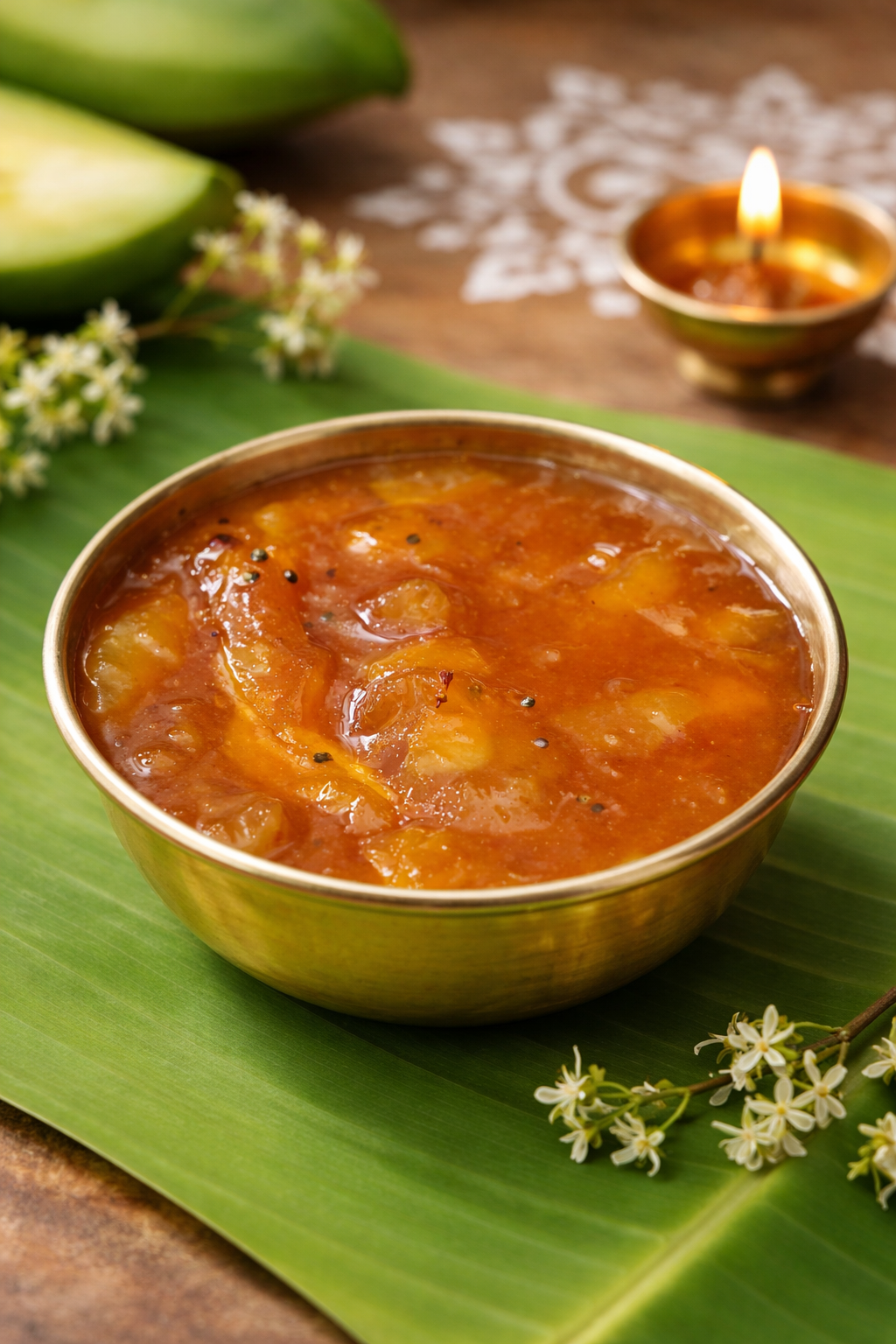
Maami’s Kitchen Secret: The Arusuvai Philosophy
The beauty of this dish lies in its symbolism. Each ingredient represents a different life experience:
- Jaggery (Sweet): Represents the happy moments.
- Raw Mango (Sour): Reflects the surprises and challenges.
- Neem Flowers (Bitter): Symbolizes the difficult times.
- Red Chili (Pungent): Stands for excitement and anger.
- Salt (Salty): Represents the zest and interest in life.
- Astringent (Turmeric/Mango Skin): Represents the shock or unexpected moments.
The Morning Tradition: Puthandu Kanni Setup
Before we head to the kitchen to prepare our feast, the New Year begins with Puthandu Kanni (the auspicious first sight). Traditionally, we set this up on New Year’s Eve so it is the first thing we see upon waking up.
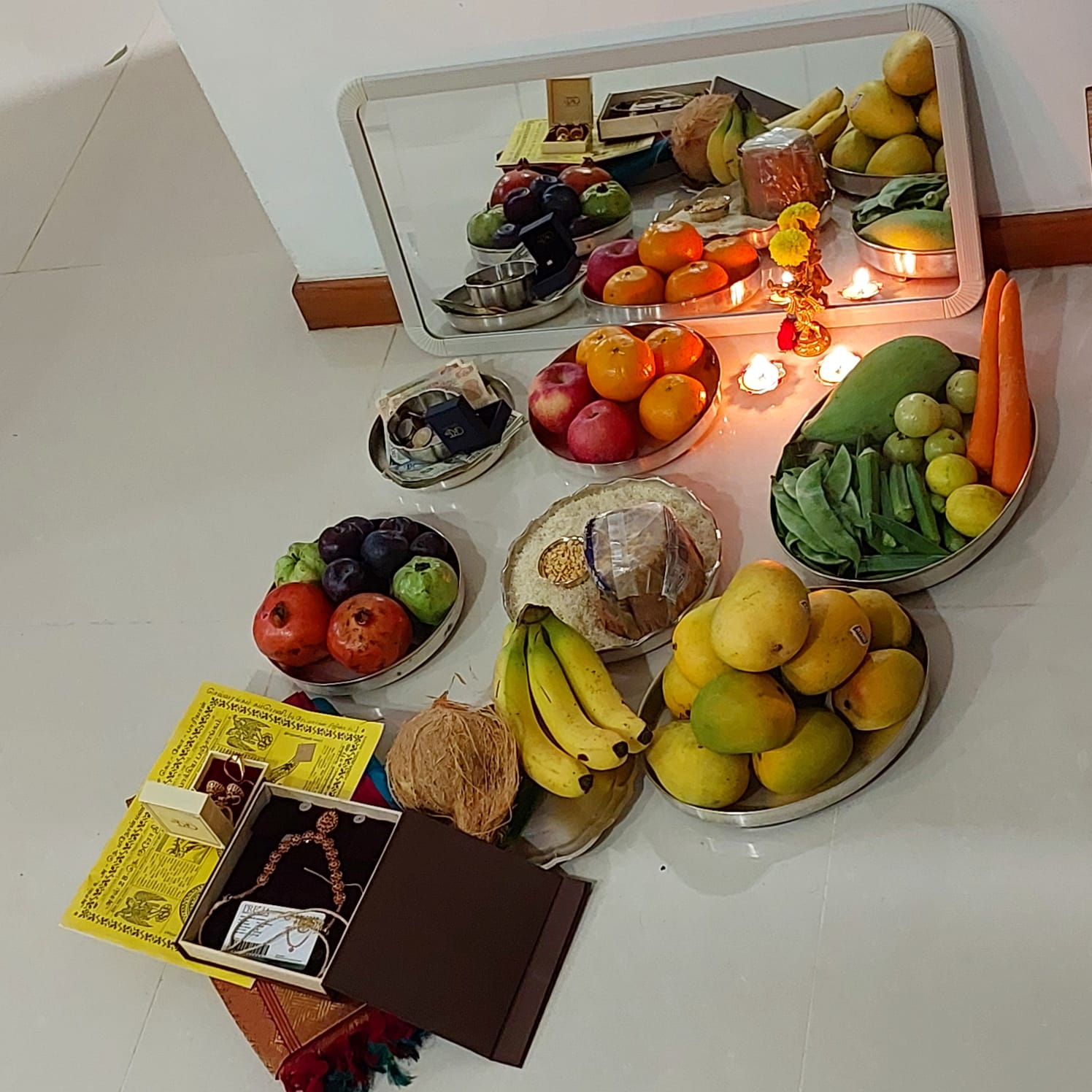
To set up your Kanni, arrange these items in front of a mirror:
- Mukkani (The 3 Fruits): Mango, Jackfruit, and Bananas.
- Pantry Staples: Bowls of Rice, Toor Dal, and Jaggery to symbolize a kitchen that is always blessed with abundance.
- Vegetables: A variety of fresh seasonal vegetables.
- Flowers: Bright yellow Konnappoo (Laburnum) is traditional.
- Prosperity: Gold/silver jewelry, coins, and currency notes.
- Essentials: Betel leaves, nuts (Vethalai Pakku), and a lit lamp (Vilakku).
Maami’s Note: Seeing these symbols of abundance first thing in the morning ensures a year filled with prosperity and light!
🛒 Ingredients
To make this authentic Mango Pachadi, you will need:
- Raw Mango: 1 medium-sized (peeled and roughly chopped)
- Jaggery: 1 cup (grated or powdered)
- Water: 1/4 cup
- Salt: A pinch
- Oil: 1/2 tsp
- Tempering: 1/2 tsp Mustard seeds, 1 Dried Red Chili (broken)
- Aromatics: A pinch of Neem Flowers (Vepam Poo) - fresh or dried
👩🍳 Method
Step 1: Softening the Mango
Place the chopped raw mango pieces in a pan with 1/4 cup of water. Cover and cook over medium heat until the mango turns soft and tender.
Step 2: Adding the Sweetness
Add 1 cup of jaggery to the cooked mango. Stir continuously until the jaggery melts completely. Let it simmer along with the mango until the mixture starts to thicken into a jam-like consistency.
Step 3: Balancing Flavors
Once thickened, add a pinch of salt to enhance and balance the sweetness. Mix well.
Step 4: The Tempering (Tadka)
In a small ellupa karandi (tempering ladle), heat 1/2 tsp of oil. Add mustard seeds and let them splutter.
Step 5: The Bitter-Sweet Finish
Add the broken red chili and a pinch of neem flowers to the ladle. Once the neem flowers are lightly roasted and fragrant, immediately pour this tempering into the mango mixture.
Step 6: Final Touch
Turn off the flame and mix everything thoroughly. Your vibrant Mango Pachadi is ready!
🧊 Storage & Serving Tips
- Fridge: Store in an airtight glass container for up to 4–5 days. Use a dry spoon for serving.
- Serving: This is traditionally served as a small portion on the bottom right corner of the banana leaf during the New Year Ilai Sappadu. It pairs divinely with curd rice!
🌿 Nutritional Benefits
- Raw Mango: Packed with Vitamin C and A to boost immunity during the hot summer months.
- Jaggery: A natural source of iron and an excellent digestive aid.
- Neem Flowers: Renowned for their blood-purifying and antibacterial properties.
Frequently Asked Questions (FAQ)
1. Can I use any type of mango for this recipe? For the most authentic taste, use Raw (Green) Mango. Varieties like Kili Mooku (Totapuri) are excellent because they have a nice tang without being overly sour. Avoid using ripe mangoes.
2. Can I use white sugar instead of jaggery? Technically, yes, but I wouldn't recommend it! Jaggery (Vellam) provides the rich color and earthy taste essential for this dish. If needed, Brown Sugar or Palm Sugar (Karupatti) are better alternatives.
3. What if I don't have fresh Neem Flowers (Vepam Poo)? Dried neem flowers work perfectly and are found in most specialty stores. They provide that essential hint of bitterness for the Arusuvai philosophy.
4. My Pachadi is too thin. How do I thicken it? Let it simmer on a medium-low flame for a few more minutes after adding the jaggery. The syrup will naturally thicken as it cools.
5. Can I skip the Neem Flowers if I don't like the bitterness? You can reduce the amount to a tiny pinch, but I recommend keeping them in—the bitterness is very subtle when balanced with sweet jaggery!
6. How long does Mango Pachadi stay fresh? It stays fresh in an airtight glass container for 4–5 days in the refrigerator.
🎥 Video
Watch me prepare this step-by-step to get the perfect jam-like consistency!

Maami’s Pro-Tip:
Always add the salt after the jaggery has melted. Salt is the "magic" ingredient that actually makes the sweetness of the jaggery stand out! 💛
✨ Accept all flavors of the new year with grace and a happy heart! ✨
With love,
Sollungo Maami 💛
. Comments
Loading comments...